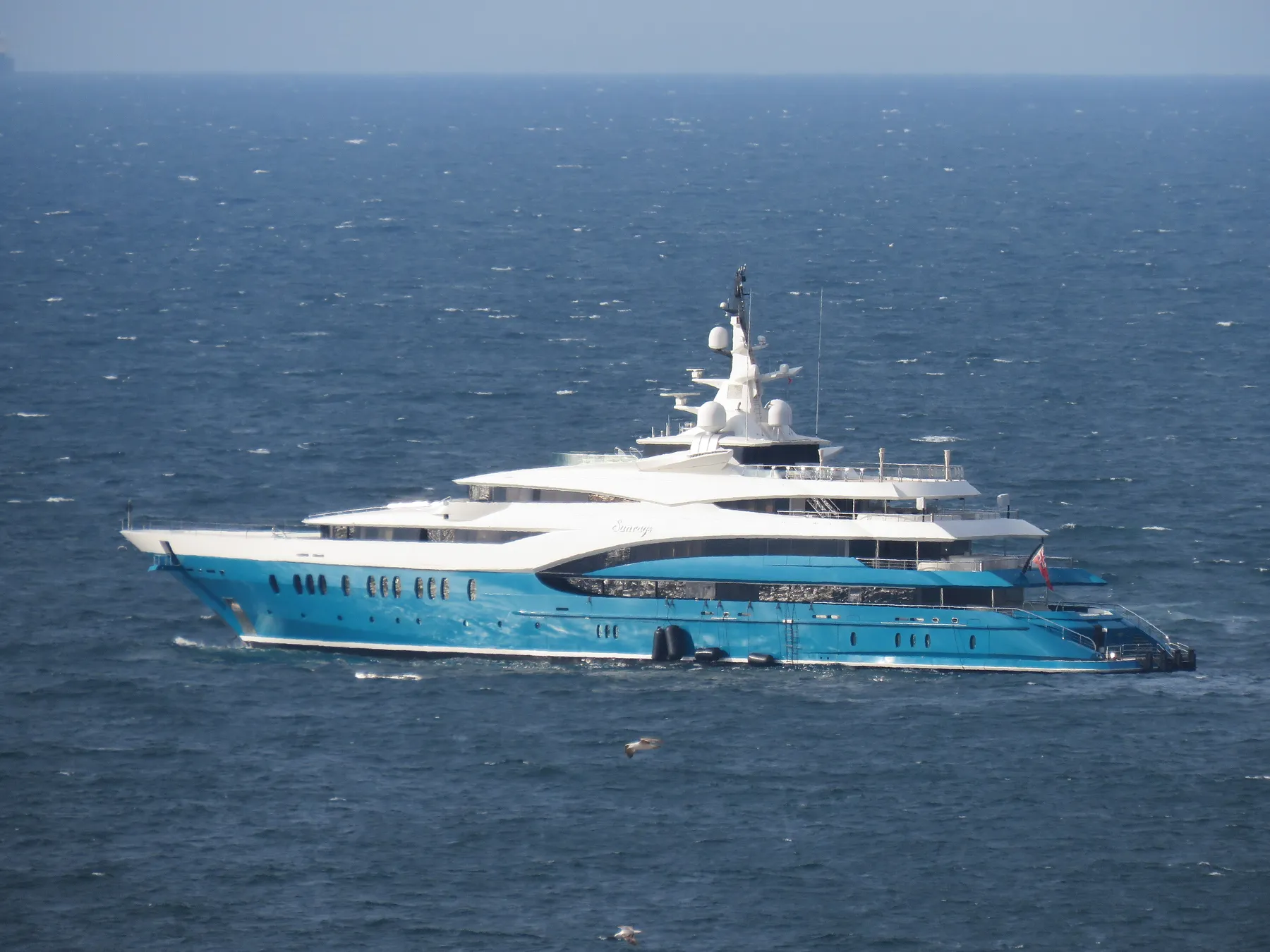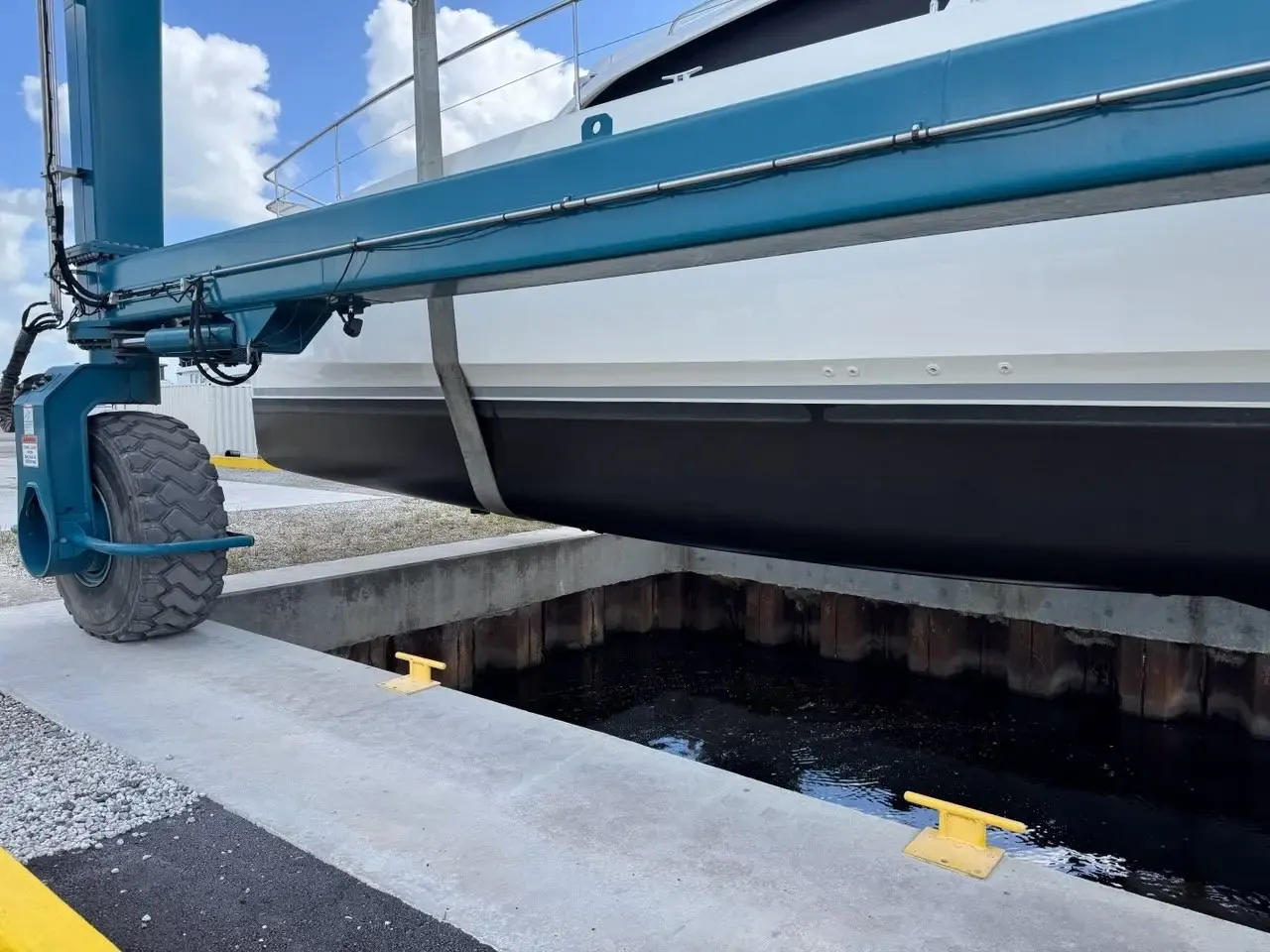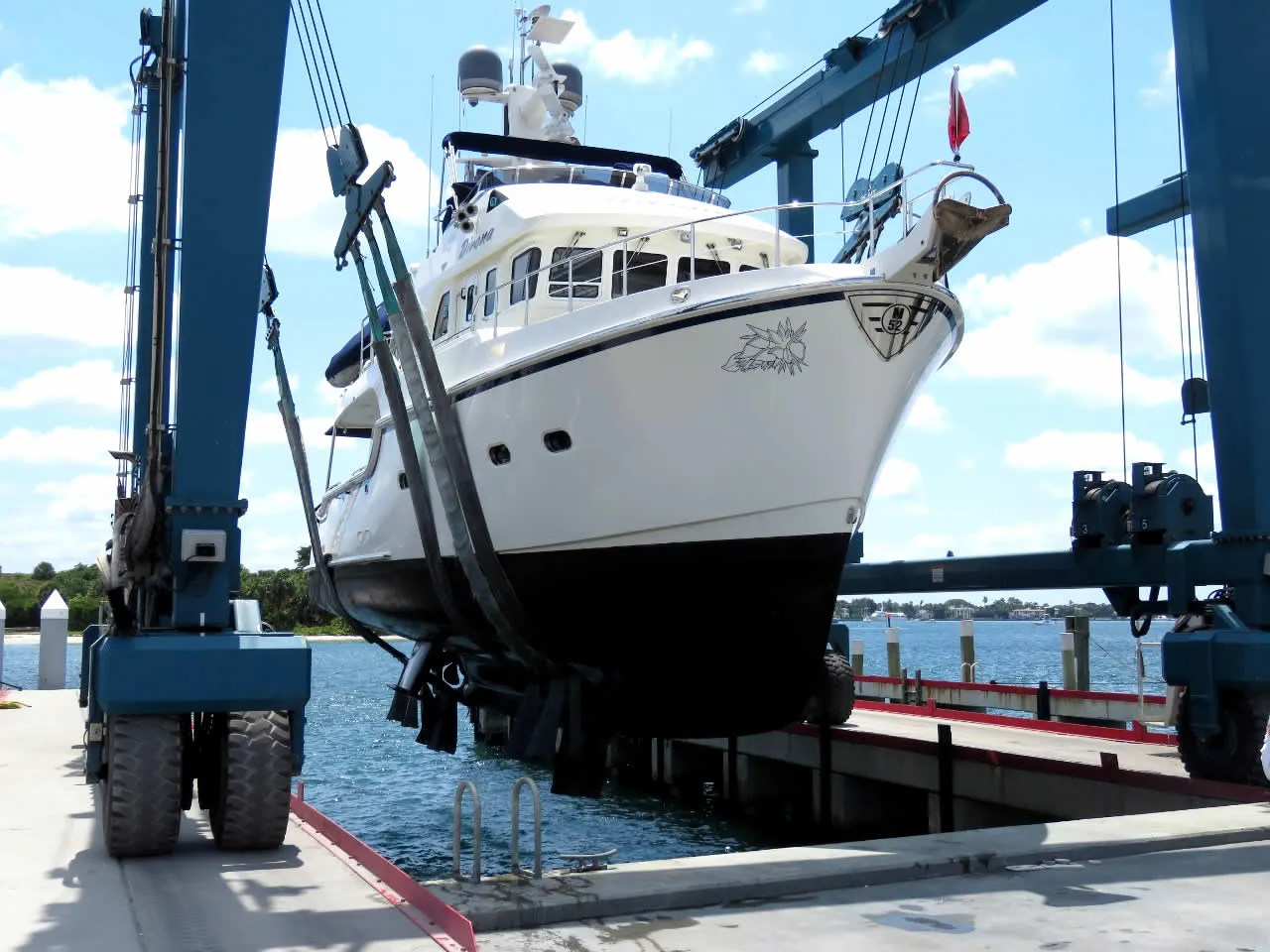

Every surface left in the sea starts collecting biofilm within days, followed by weed, mussels and barnacles. Ultrasonic antifouling targets the very first step of that process: attachment.
The parts of the system
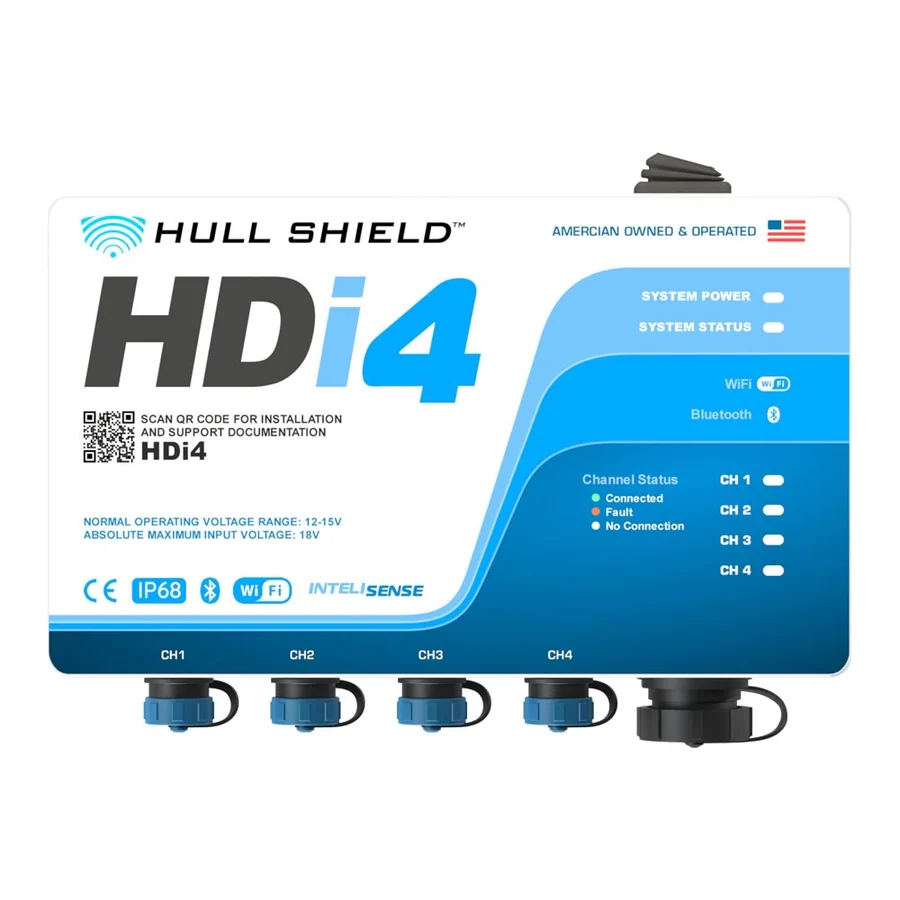
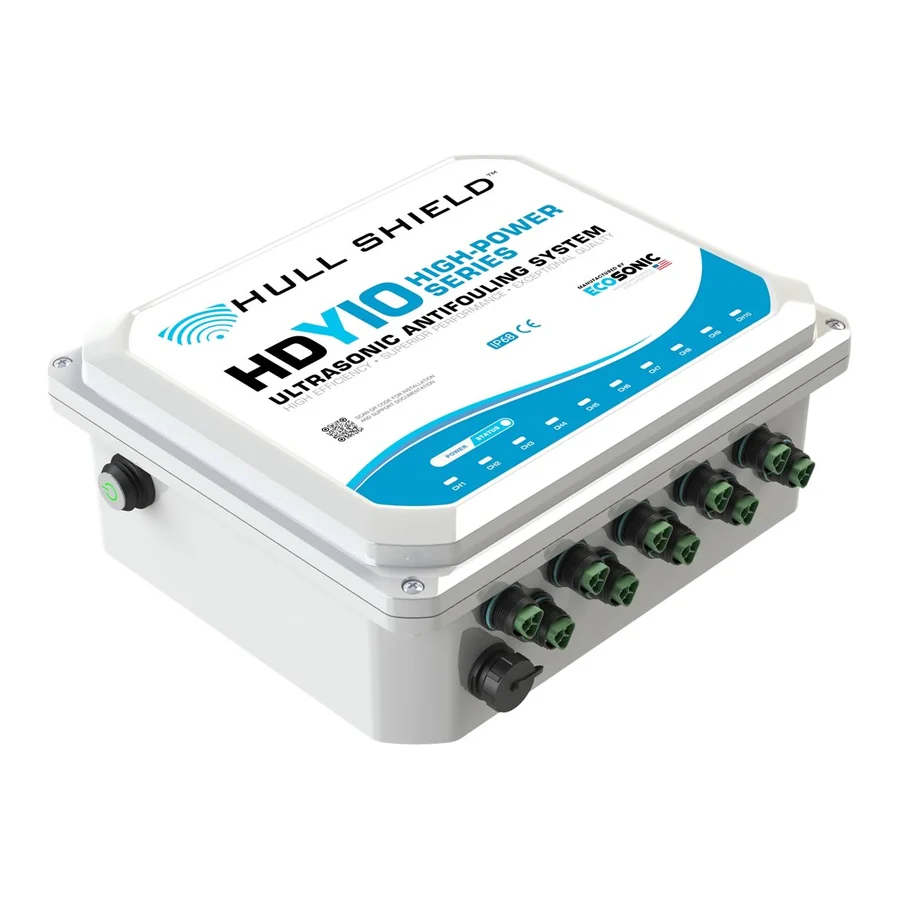
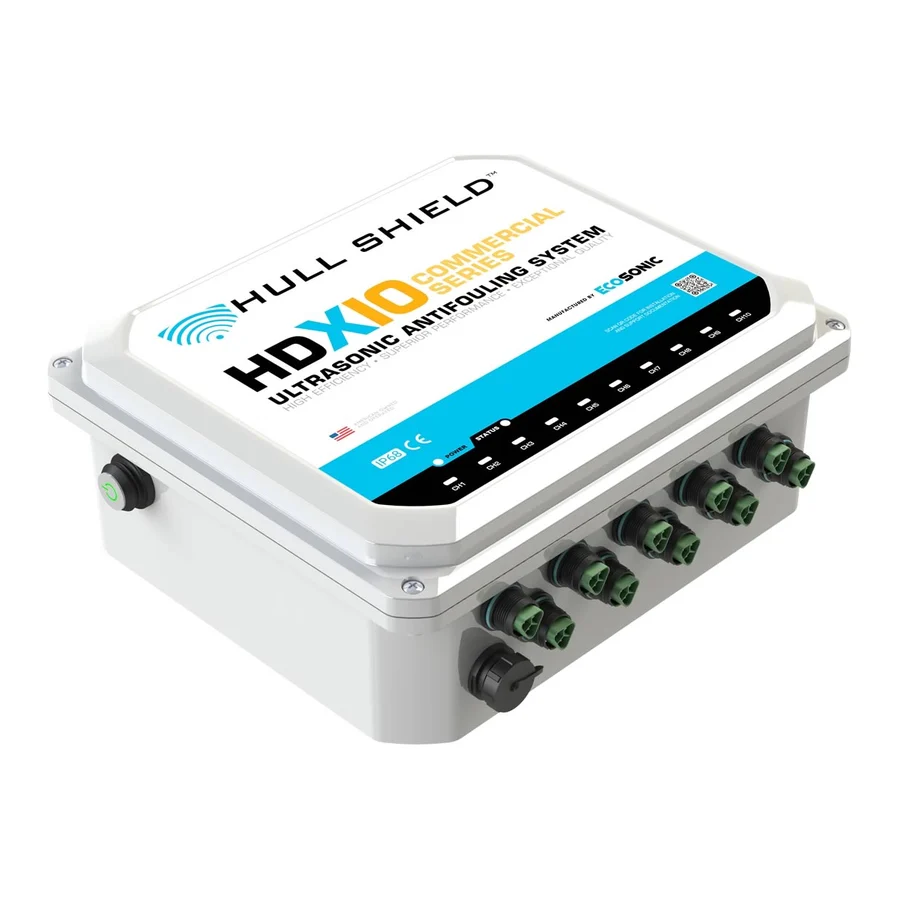
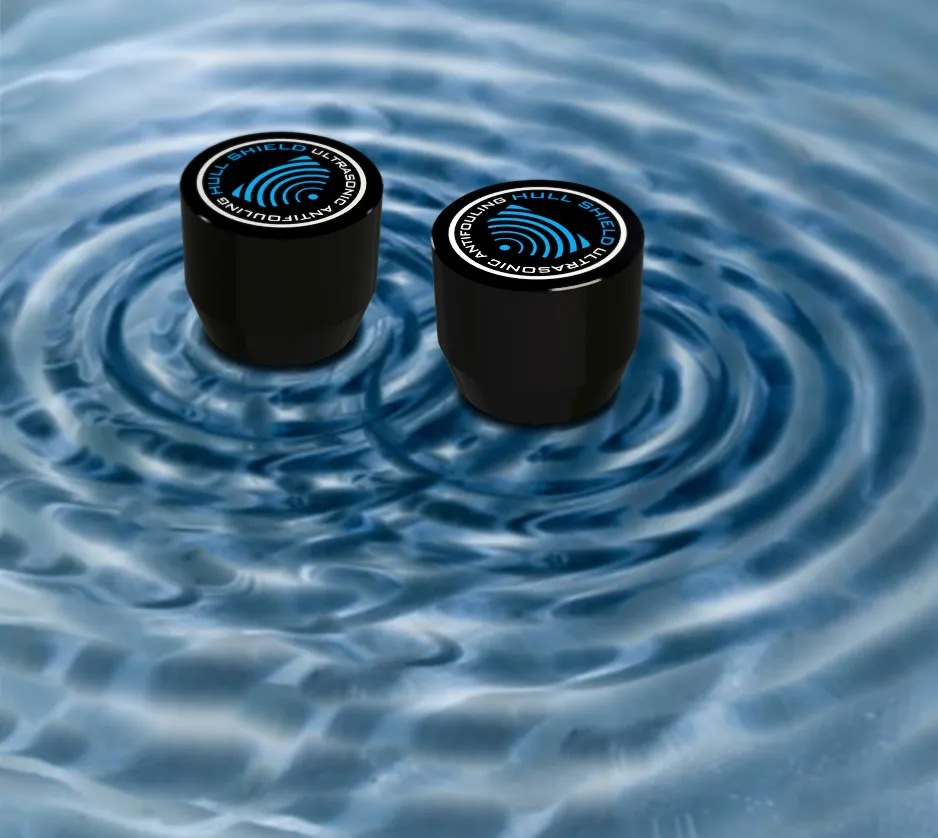
A Hull Shield system has two main components: a controller mounted inside the boat and wired to the batteries, and transducers bonded to the inside of the hull. The controller generates the ultrasonic signal; the transducers turn it into pulses and pass them into the hull. No through-holes, nothing added below the waterline.
What the frequencies do
- 20–40 kHz: a high-pressure layer a few microns thick forms at the hull surface. Small organisms can’t occupy it and can’t attach.
- 40 kHz and above: organisms that are already attached have their cell structure, life processes and reproduction disrupted, so they can’t spread.
The right expectations
Ultrasonic antifouling is preventive: it won’t remove existing growth, so the hull is cleaned before installation. The system must run continuously and the hull must be able to carry sound; it won’t work on hulls with wood layers or on boats that sit on the bottom at low tide.
Shafts, props, rudders and pods are isolated from the hull by mounts and seals, so each is protected by its own transducer.
See the technology section for more.