

Attachment is prevented
A high-pressure layer a few microns thick forms at the surface. Larvae and spores can’t occupy it; those that approach are pushed away.
How it works
How Hull Shield protects your boat, in plain language: from the problem itself to what happens at the hull surface, from layout to installation.
Any surface that enters the sea becomes a habitat within hours. This is biofouling, and it moves much faster in warm, nutrient-rich waters such as the Aegean and the Mediterranean.
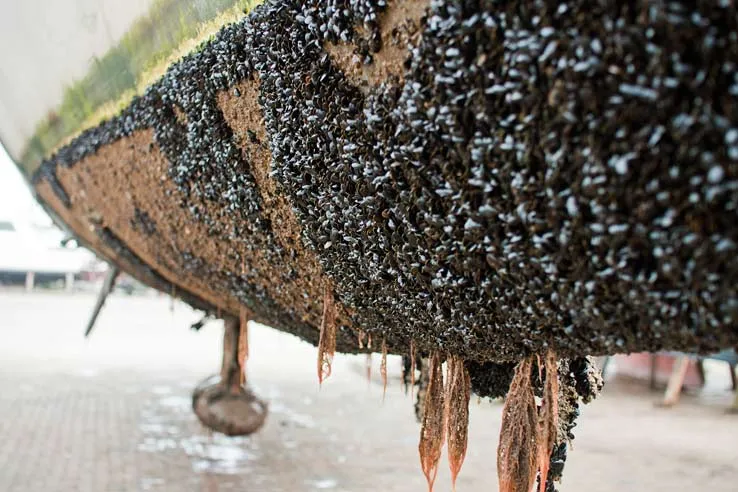
Bacteria and micro-algae form a thin, slimy film on the hull. Barely visible, but the foundation for everything that follows.
The biofilm gives spores something to grip. The hull starts to grow a green-brown cover.
Larvae cement themselves to the hard surface and build shells. From here on, only mechanical cleaning removes them.
The human ear hears sound up to about 20 kHz. Frequencies above that are called ultrasound. Car parking sensors, medical imaging and boat sonars all use it. Different frequencies do different jobs: one creates an image, another measures distance. The bands Hull Shield uses make hard surfaces vibrate at a microscopic scale.
Ultrasound fades quickly in air but travels very well through hard, dense materials. That’s why Hull Shield sends sound into the hull itself, not into the water.
Hull Shield is like a sound system: an amplifier (the controller), speakers (the transducers) and a vibrating membrane (the hull).
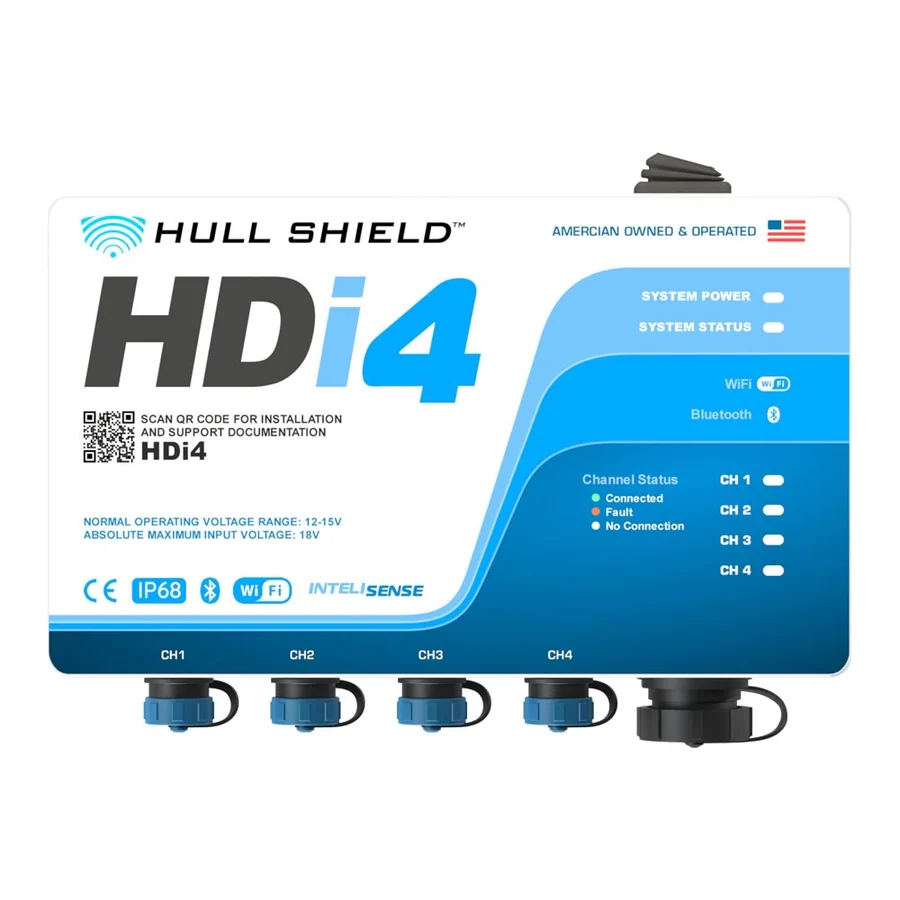
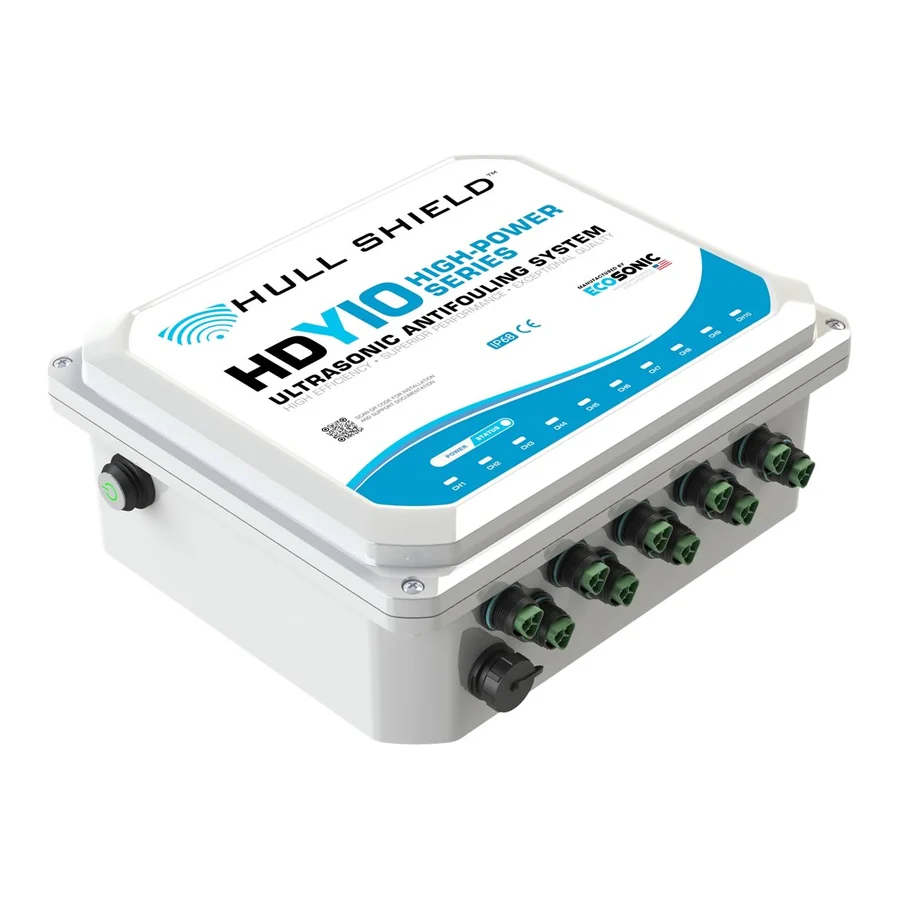
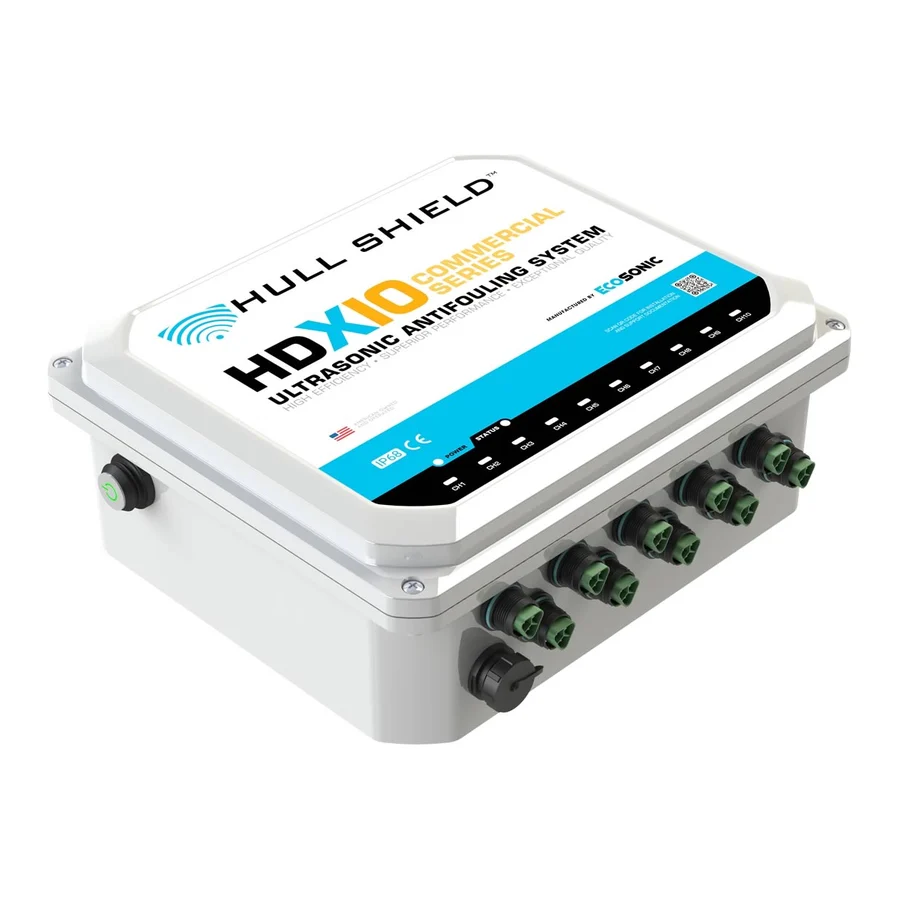
Mounted inside the boat and wired to your existing batteries, the controller generates the ultrasonic signal. It drives and monitors each transducer channel independently, and drops into a no-drain sleep mode below 50% battery.
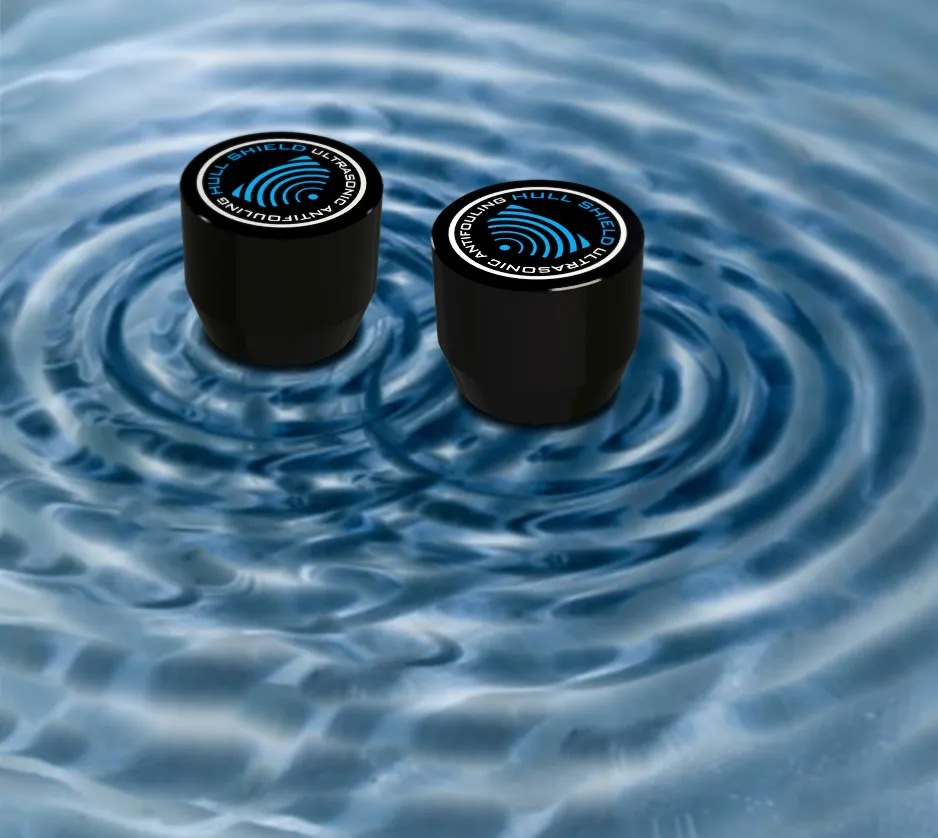
Bonded to the inside of the hull, the transducer converts the electrical signal into ultrasonic pulses. No through-holes, nothing added below the waterline.
Hard materials such as fiberglass, aluminum and steel carry sound very well. Each pulse spreads over a wide area around the transducer; one HDi transducer protects about 200 sq ft of hull.
The outer hull surface vibrates at a microscopic scale and creates a high-pressure layer a few microns thick. Larvae and spores can’t pass through it to attach.
Hull Shield continuously sweeps its frequencies, so two different effects work together against different organisms.
A high-pressure layer a few microns thick forms at the surface. Larvae and spores can’t occupy it; those that approach are pushed away.
Organisms already attached have their cell structure, life processes and reproduction disrupted. They can’t multiply and spread.
Larvae are in the water all the time. Protection depends on the layer being there without interruption. Hull Shield’s draw is low and adjusts itself to battery condition.
The hull behaves as one surface, with transducers spread at even intervals. But shafts, props, rudders and pods are isolated from the hull by mounts, gaskets and seals, and ultrasound can’t cross that isolation. So each independent part gets its own transducer.
An evenly spaced array along the wetted surface.
A transducer on the shaft protects the prop with it.
Isolated from the hull, with its own transducer.
Cooling water intakes and strainers (HDY/HDX).
The tunnel and prop are a separate point.
Installation needs no special tools and can be done in the water or on the hard. On cored hulls, the foam layer may need removing at the mounting point.
Transducer positions and controllers are set from the vessel’s drawings and a survey.
Existing growth is fully removed; the system is preventive and won’t remove barnacles already there.
Transducers are bonded to the inside of the hull. No holes.
The controller is wired to the batteries; power profile and frequencies are set in the app.
It stops new growth from attaching; it doesn’t remove existing fouling.
Least maintenance with a soft ablative paint; owners report 1–2 years more paint life.
Sleeps below 50% battery. Solar must sustain a 1–2 Ah draw when not charging.
Inaudible, no electrolysis, no harm to the hull, and no effect on marine life not touching the hull.
Hulls with wood in their layers and boats that sit on the bottom at low tide.
Fewer diver cleanings and haul-outs; not none at all.
Newsletter
New products, boat show news and maintenance guides. At most one email a month.